• Read
  • Publish
  • About

Read

Explore current and past TAD issues and related content.

Current Issue

Learn more about our current issue

Past Issues

Browse our compilation of past issues

Extras

Webinars, videos, articles and more

Publish

View submission guidelines, learn more about our review process and find helpful recommendations for publishing work in TAD Journal.

Call for Papers

Submit work for our next issue

Author Guide

Explore editorial tips and recommendations

About

TAD Journal is a peer-­reviewed international journal dedicated to the advancement of scholarship in the field of building technology and its translation, integration, and impact on architecture and design.

Our Mission

Learn more about our vision and values

Editorial Board

Meet the minds bringing our mission to life

Advisory Board

Meet the experts shaping TAD’s future

Issue 9:2

Innovation

The focus area for this issue seeks to explore inventive topics from different aspects of the built environment. Innovation captures new ideas, methods, strategies, products, forms, designs, etc. Innovation is the action or process of innovating, introducing, or presenting novelties and modifying what is established by introducing new elements or forms. It is a change introduced to an existing product. Imaginative ideas include improvements that capture how components or processes are modified or configured in designs, systems, or domains, like building materials, data processing, digital fabrication, computation, history and theory of innovation. Innovation is critical to the success of any endeavor, such as an organization, enterprise, field or discipline, or industry. Invention is the primary driver of advancement in the built environment and other sectors, as it provides approaches, resources, and concepts generated and realized, leading to a better and more sustainable built environment. Invention guides all disciplines, and inventive ideas involve various players with diverse incentives.


Articles
9.2
A Nexus of Ties and Networks of Transfiguration
While invention may remain in some circles the purview of the lone genius, innovation is undeniably social, political,...
A Nexus of Ties and Networks of Transfiguration
9.2
From Fruiting to Building: Exploring Dual-Purpose Mycelium Structures for Circular Economy Strategies
This research introduces an innovative approach to mycelium-based composites (MBC) in architectural design by integrating...
From Fruiting to Building: Exploring Dual-Purpose Mycelium Structures for Circular Economy Strategies
9.2
Innovation Doesn’t Care, But We Must
“In this research, we propose a novel workflow for doing a thing through application of some technology”—I...
Innovation Doesn’t Care, But We Must
9.2
Conceptual Design of Structures: Connecting Engineering and Architecture
Edited by Pierluigi D’Acunto, Patrick Ole Ohlbrock, and Roland Pawlitschko, Birkhäuser, 2024 224 pages USD 70.99...
Conceptual Design of Structures: Connecting Engineering and Architecture
9.2
Innovation in Practice in Theory: Positioning Architectural Design and Its Agency
Edited by Caterina Barioglio, Daniele Campobenedetto, Andrea Alberto Dutto, Valeria Federighi, Caterina Quaglio,...
Innovation in Practice in Theory: Positioning Architectural Design and Its Agency
9.2
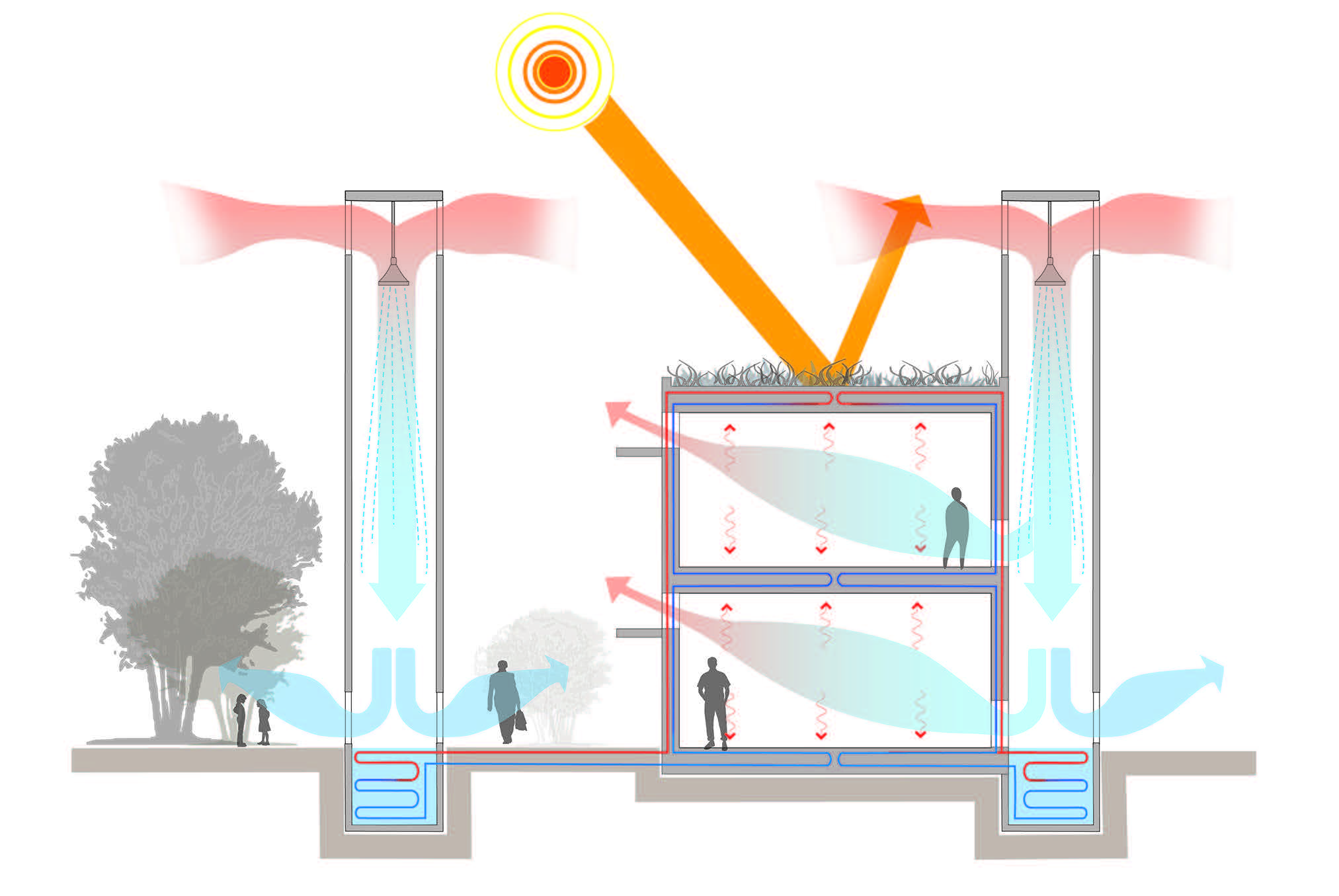
Architecture as Thermopolitics
In recent years, Madrid has witnessed an increasing frequency, duration, and intensity of heat waves, exacerbated...
Architecture as Thermopolitics
9.2
Exploring the Integration of Technological Tools in Architectural Pedagogy: A Systematic Literature Review
Over the past decade, technological tools have significantly reshaped architectural pedagogy, influencing how design...
Exploring the Integration of Technological Tools in Architectural Pedagogy: A Systematic Literature Review
9.2
A Decision-Making Tree for Adapting the Additive Manufacturing Repair Repertoire for Biopolymer Composite Materials
Drawing inspiration from ‘broken world thinking,’ aligning repair with innovation, this paper presents the...
A Decision-Making Tree for Adapting the Additive Manufacturing Repair Repertoire for Biopolymer Composite Materials
9.2
Re-Fashioning Earthbag Construction: Engaging Textile Waste Through Flexible-Formed Modular Rammed Earth Construction
To reduce the reliance of earthbag construction on polypropylene, an environmentally detrimental material, and...
Re-Fashioning Earthbag Construction: Engaging Textile Waste Through Flexible-Formed Modular Rammed Earth Construction
9.2
Surface Tendon: Designing a Curved Folding Origami Joint
Curved folding is a variation of origami that utilizes curved instead of straight creases. The curvature of the...
Surface Tendon: Designing a Curved Folding Origami Joint