• Read
  • Publish
  • About

Read

Explore current and past TAD issues and related content.

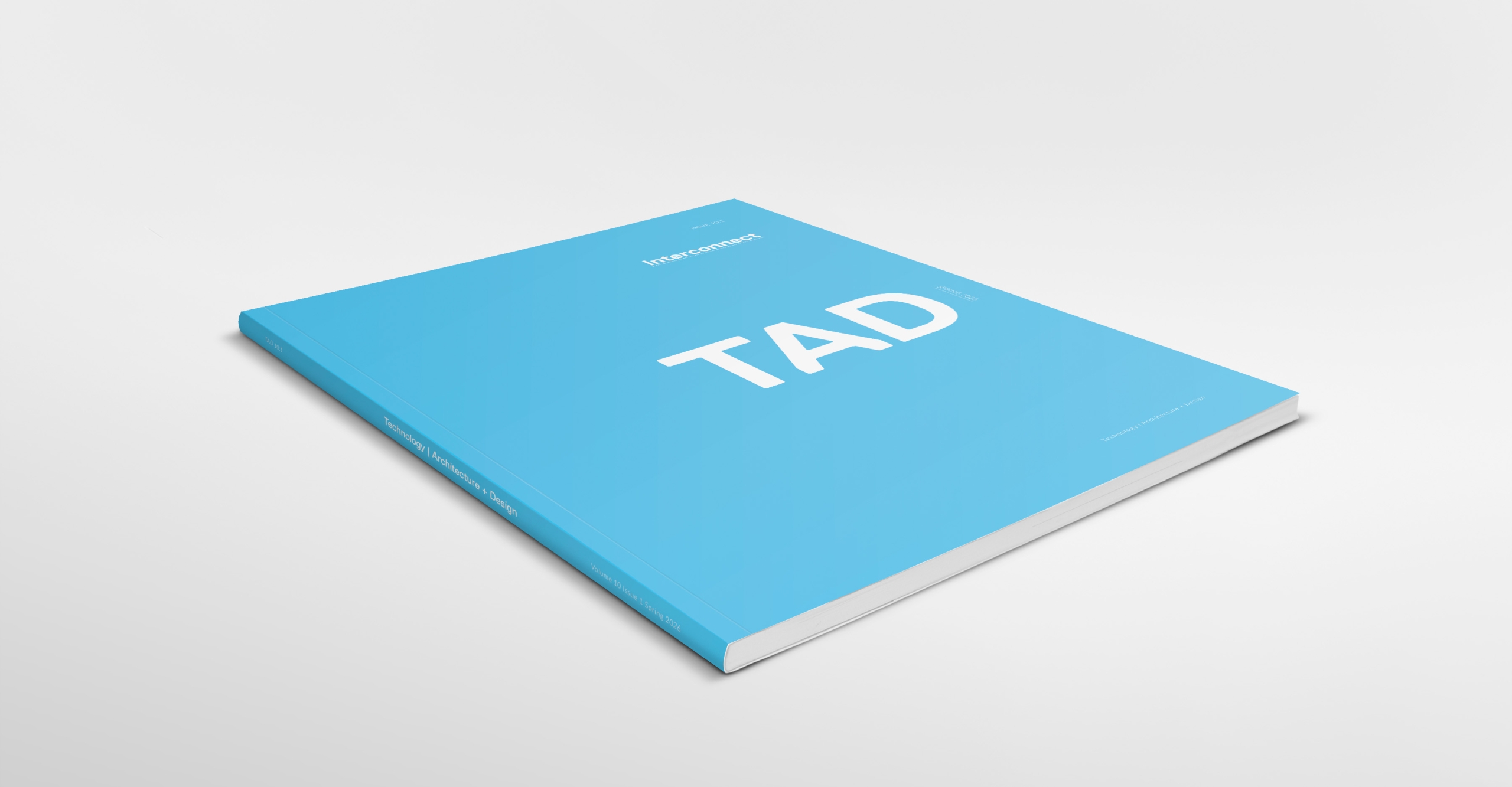
Current Issue

Learn more about our current issue

Past Issues

Browse our compilation of past issues

Extras

Webinars, videos, articles and more

Publish

View submission guidelines, learn more about our review process and find helpful recommendations for publishing work in TAD Journal.

Call for Papers

Submit work for our next issue

Author Guide

Explore editorial tips and recommendations

About

TAD Journal is a peer-­reviewed international journal dedicated to the advancement of scholarship in the field of building technology and its translation, integration, and impact on architecture and design.

Our Mission

Learn more about our vision and values

Editorial Board

Meet the minds bringing our mission to life

Advisory Board

Meet the experts shaping TAD’s future

Issue 10:1

Interconnect

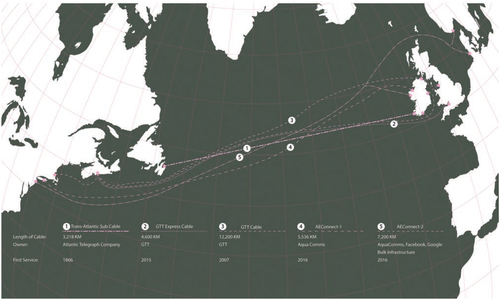
Our world is increasingly interconnecting. By 2030, more than 90% of the world’s population and more than 50% of its physical infrastructure will be wirelessly linked through the internet, enabling people, objects, and places to interact with each other in virtually any conceivable way. Yet, the more accessible our environment becomes, the easier we overuse and consume it. The more we command the environment digitally, the more our conflicting needs and wants turn our collective use of it into an increasingly complex political issue that technology alone cannot resolve. One of our most significant challenges in the next decade will be to design and build environments that can turn diverse individualistic perspectives into ecologies of sustainable and equitable behavior while negotiating critically the boundary between the physical and the digital.


Articles
10.1
Legendary Interconnectedness
Even as we slip from the age of mechanistic science into what computer scientist Jim Gray called the Fourth Paradigm,...
Legendary Interconnectedness
10.1
The Architecture of Many: Agency, Perception, Negotiation
The year 2017 marked an important threshold for humanity; the number of mobile subscriptions surpassed the global...
The Architecture of Many: Agency, Perception, Negotiation
10.1
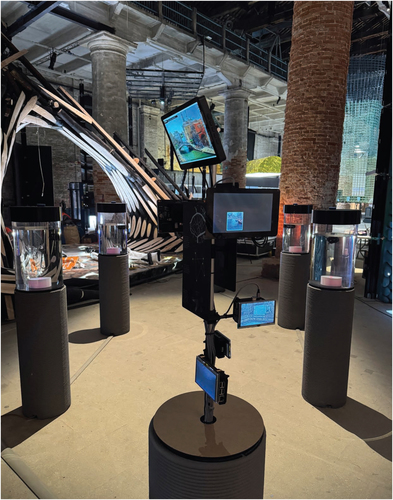
Grappling with Multiscale Design: From Microbial Ecologies to Regional Infrastructure with Real-Time Bioinformatic Feedback
As Artificial Intelligence (AI) continues to transform how we investigate and innovate, designers are faced with...
Grappling with Multiscale Design: From Microbial Ecologies to Regional Infrastructure with Real-Time Bioinformatic Feedback
10.1
Materially Present?
The education of architects has long reflected broader developments in society, technology, and the environment....
Materially Present?
10.1
What Kind of Medium is Architecture? Toward Ecological Computation
Considering the urgency of today’s environmental crises, can architecture and the built environment serve as...
What Kind of Medium is Architecture? Toward Ecological Computation
10.1
The Sociotechnical as Design Project
A sociotechnical system (STS) integrates people, social structures, organizational culture, and technical components...
The Sociotechnical as Design Project
10.1
From Prompts to Protocols: Designing Large Language Object Protocols Across Scales
Since the emergence of generative AI (GenAI) tools, designers’ work has been changing in visible and implicit...
From Prompts to Protocols: Designing Large Language Object Protocols Across Scales
10.1
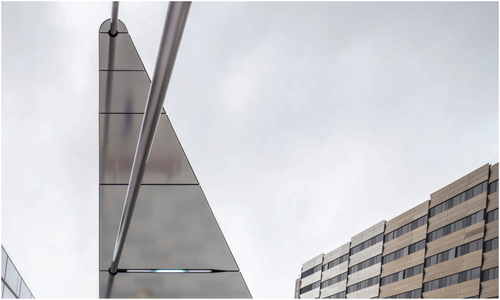
The MIT Gateway: The Reflected Ceiling Plan Reconsidered
The Kendall/MIT Gateway is located on Main Street at the threshold between the city of Cambridge and the Massachusetts...
The MIT Gateway: The Reflected Ceiling Plan Reconsidered
10.1
At the Junction and Beyond: Converging Humanistic Design Thinking and Technological Dexterity in Architecture
This statement captures an established strength of architectural design: its ability to converge human-centered...
At the Junction and Beyond: Converging Humanistic Design Thinking and Technological Dexterity in Architecture
10.1
Temporal Attractor-Weighted Spatial Network Analysis of Pedestrian Density in Integrated Multilevel Public Spaces
As dense urban environments evolve, the built fabric is becoming increasingly interconnected, linking underground...
Temporal Attractor-Weighted Spatial Network Analysis of Pedestrian Density in Integrated Multilevel Public Spaces